A Short Guide to Great Britain (1942)
Digitised copy of the US Army booklet.
Open the sourceAmericans in wartime London, 1942–45
The soldiers arrived with a printed guide to British manners and found a city whose welcome did not stretch equally to the Black soldiers among them. This site argues that London tested the special relationship at street level, and that race was where it strained most.
Our centre of gravity is the West End, above all Piccadilly Circus and the Red Cross club known as Rainbow Corner. Other places, such as Bamber Bridge in Lancashire, are useful for comparison, but the argument has to be about London.
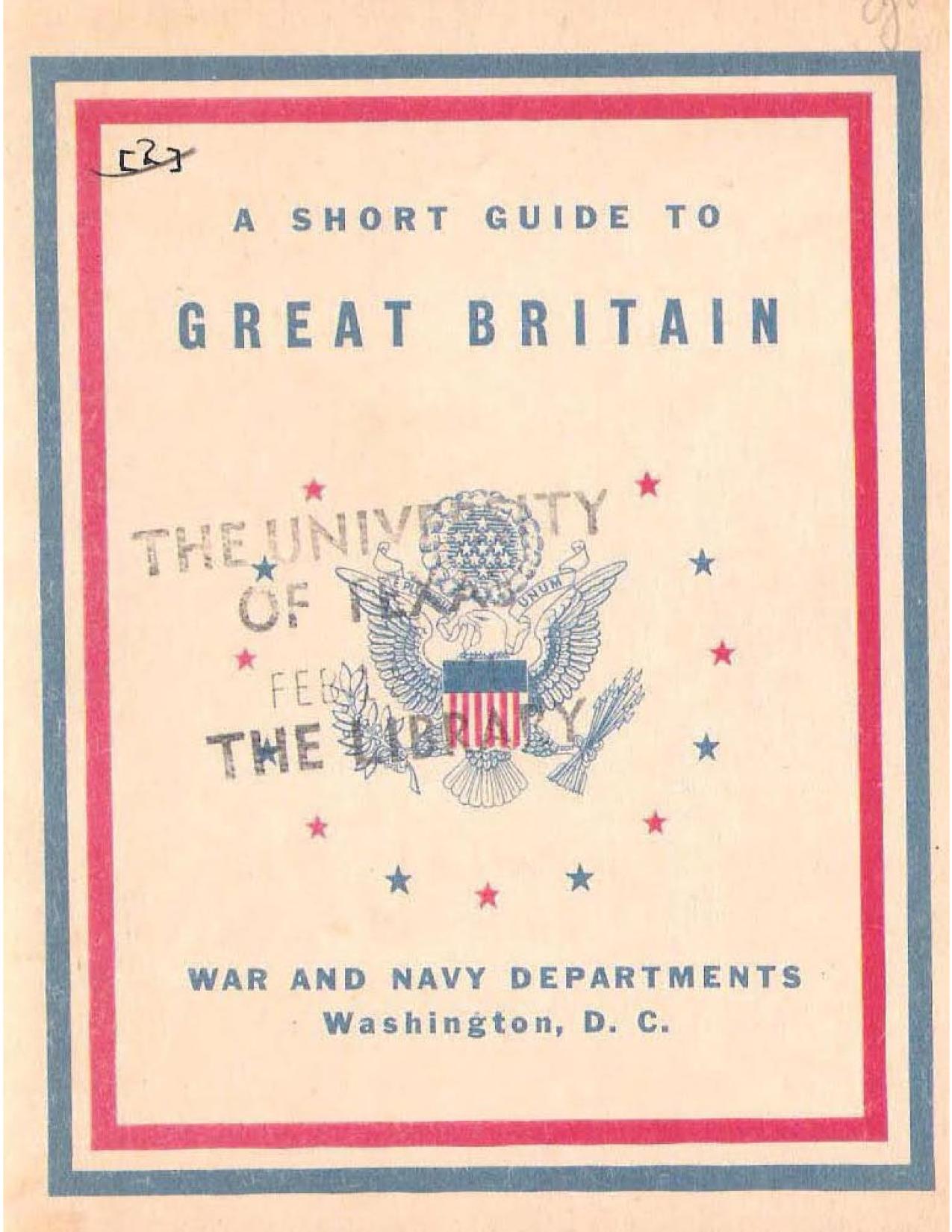
The US War Department told its soldiers how to behave in Britain in a short pocket booklet. It is brief enough to quote and gives us an official picture to hold up against what the Ministry of Information and Mass Observation recorded. Three or four pages, annotated, would make a good opening interactive.
Digitised copy of the US Army booklet.
Open the sourceAnother digitised copy.
Open the sourceRainbow Corner was run by the American Red Cross near Piccadilly Circus and Shaftesbury Avenue. It had cafés and restaurants, a laundry, barbers, showers and rooms for servicemen on leave. One American, Robert S. Arbib, remembered Piccadilly on a Saturday night as full of Allied servicemen of every nationality, with Americans moving in and out of the club in a constant stream.
Entry for the club with a gallery of photographs (for example item FRE 12645).
Open the sourceThe Ministry of Information’s Home Intelligence unit reported on public opinion. One special report, from March 1943, is titled “An American looks at American Troops in Britain”. The Mass Observation Archive at the University of Sussex holds material from 1943 on British attitudes to American troops and to people it called “coloured”.
Special report in the Home Intelligence series.
Open the sourceGuide to the collections, including 1943 material.
Open the sourceThe US Army was segregated, and British civilians’ attitudes to Black soldiers became a public problem. In London the cricketer Learie Constantine sued the Imperial Hotel after it refused him and his family a booked stay because of their race, and won nominal damages in 1943. In Lancashire the Bamber Bridge incident of 24 and 25 June 1943 left one man dead and led to mutiny convictions. Together they show how far the friendly image could stretch.
The Archives’ story of the case.
Open the sourceCase file highlight.
Open the sourceIWM overview.
Open the sourceThe “special relationship” is often remembered as a simple friendship, and anniversaries of D-Day and VE Day keep that version going. The wartime record is messier. Lucy Bland’s work on the children of Black GIs and white British women shows an encounter that people are still working through.
Cover of A Short Guide to Great Britain (US Army Service Forces, Special Service Division), Internet Archive item AShortGuideToGreatBritian (https://archive.org/details/AShortGuideToGreatBritian). A US government publication. The scan carries a library stamp.